Modern Applications of Natural Stone in Architecture & Interior Design
 Team
Team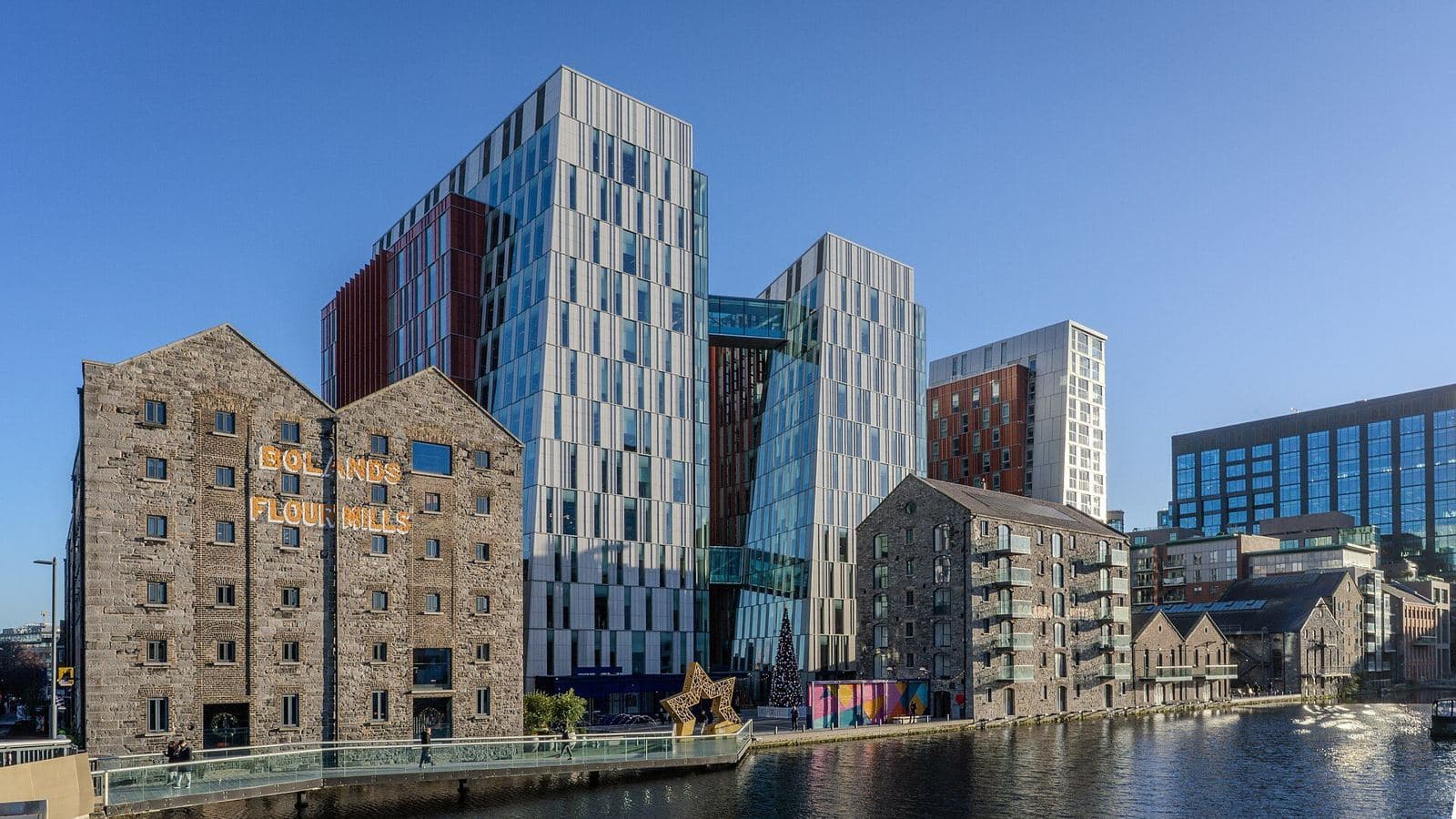
An old material with new jobs
Stone is the oldest building material we have, and it is having one of its most inventive periods. Better cutting technology, lighter fixing systems and a renewed interest in durable, low-carbon construction mean architects and designers are using stone in ways that would have been impractical a generation ago. Here are the applications shaping modern projects — and what they ask of the stone.
Ventilated stone facades
The most widespread modern use of stone on buildings is the ventilated facade: thin panels — often 30 mm — hung on a metal substructure with an air gap behind. The stone sheds rain and protects the insulation, while the cavity manages moisture and heat. It gives a building a natural, long-lasting skin without the weight of solid masonry. The stone needs good flexural strength and frost resistance, accurate calibration, and precise anchor drilling — so supplier capability matters as much as the stone. See our comparison of sandstone and limestone for cladding.
Load-bearing stone, rediscovered
A small but influential movement is putting stone back to work structurally. Projects such as 15 Clerkenwell Close in London use an exposed load-bearing stone frame instead of a steel or concrete one, arguing that stone's compressive strength and low embodied carbon make it a serious structural option. It is not mainstream yet, but it is changing how engineers think about the material.
Adaptive reuse: keeping the stone
Some of the most compelling modern projects are not new stone at all. Historic stone warehouses, mills and industrial buildings are being retained and converted, with new construction built alongside — as at Boland's Mills in Dublin, pictured above, where the old stone mill buildings sit beside new offices and homes. Keeping existing stone avoids the carbon of demolition and new material, and it gives new districts an identity no new building can fake.
Interiors: from surfaces to sculpture
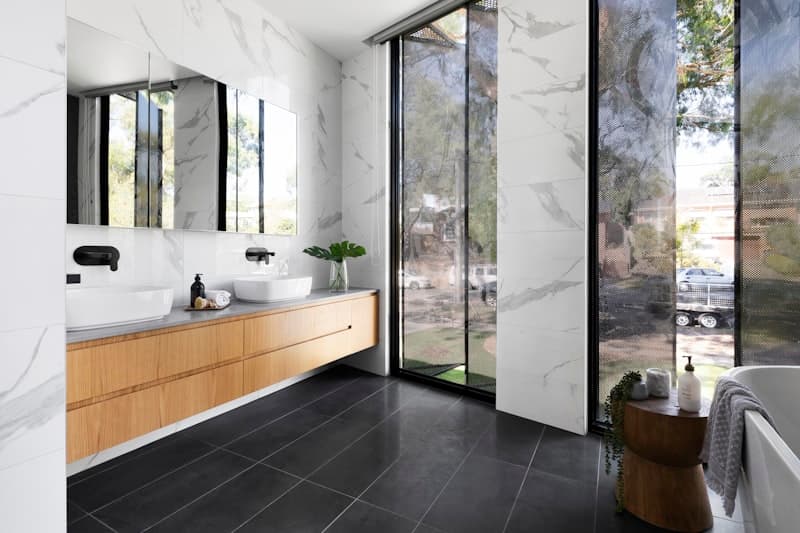
- Monolithic pieces. Basins, bath tubs, kitchen islands and furniture cut or carved from a single block, made practical by CNC and 5-axis machining.
- Slab walls and bookmatched features. Floor-to-ceiling slabs turn a wall into the room's focal point.
- Textured surfaces. Fluted, ribbed and split-face finishes add depth and play with light.
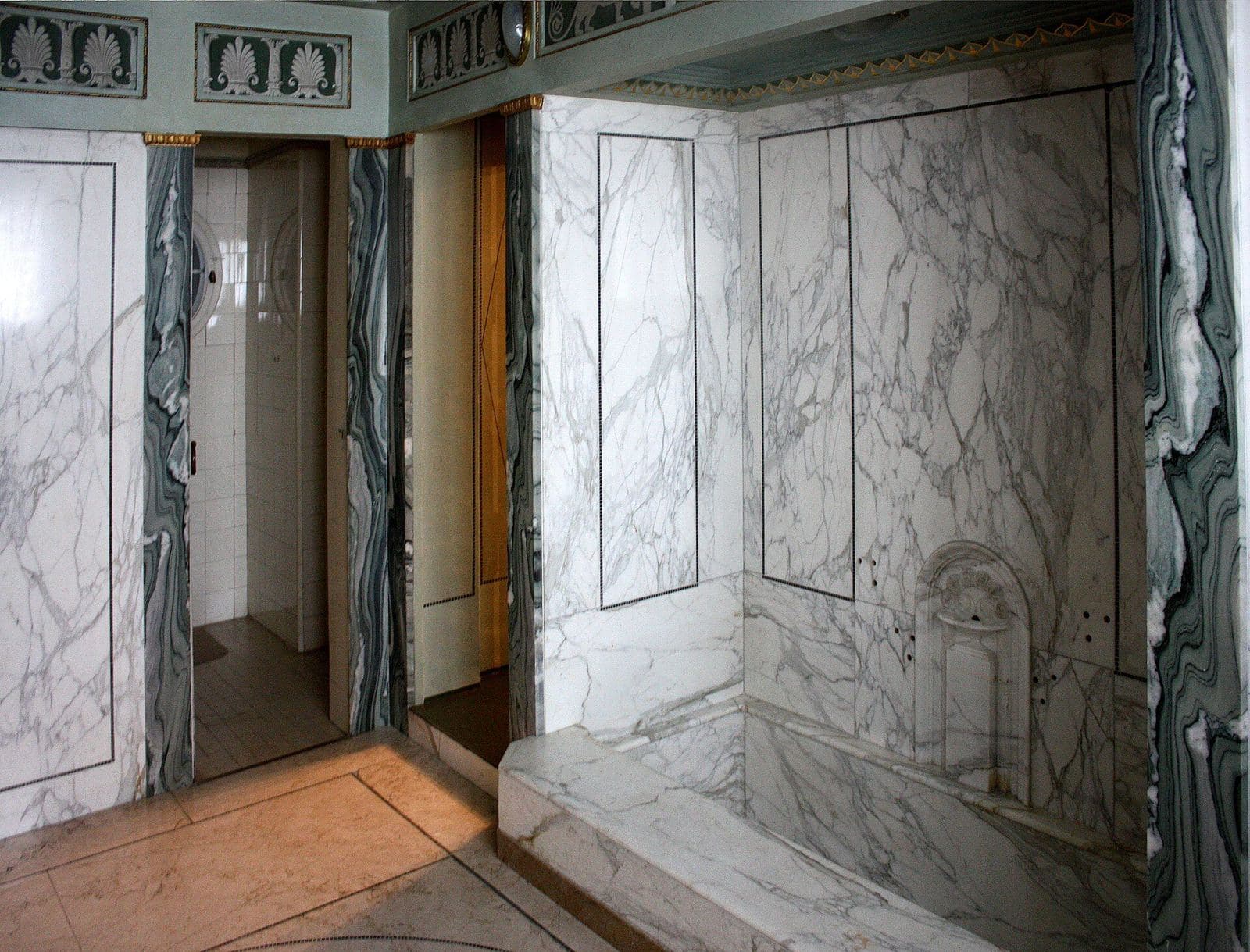
- Wet rooms in stone. A tradition as old as the marble bath at Schloss Molsdorf in Germany, pictured below the article — and still one of stone's most luxurious uses. Modern versions rely on honed or textured finishes for grip and on correct sealing and falls to drains.
Floors that work harder
Stone's thermal mass makes it an excellent partner for underfloor heating and passive design: it stores heat and releases it slowly. Large-format tiles and calibrated slabs reduce joints for a cleaner look, and outdoor-rated finishes allow the same floor to run from inside to terrace.
Public spaces and landscape
Paving, steps, benches and water features in granite, basalt and sandstone remain the default for squares and streetscapes because they last. Increasingly, designers specify reclaimed paving and setts, and design details — thickness, jointing, bedding — that allow the stone to be lifted and relaid rather than replaced.
Designing with stone: practical notes
- Choose the stone for the use first, the look second — ask for test data. Our guide to choosing stone walks through it.
- Involve the supplier early for facades and monolithic pieces; block size limits what is possible.
- Reserve material from one block for continuous surfaces.
- Specify finishes by location: polished for walls, honed or textured where people walk.
- Detail for maintenance and future reuse.
Looking for the right stone or fabricator for your next project? Browse verified quarries, processors and installers in the LithoPrime Vendor Network, or post an RFQ and let suppliers come to you.
Photos: Bolands Mills, Dublin by David Kernan, CC BY 4.0, via Wikimedia Commons; Molsdorf, das Schloss, Marmorbad by Dguendel, CC BY 4.0, via Wikimedia Commons.
Gallery
Topics