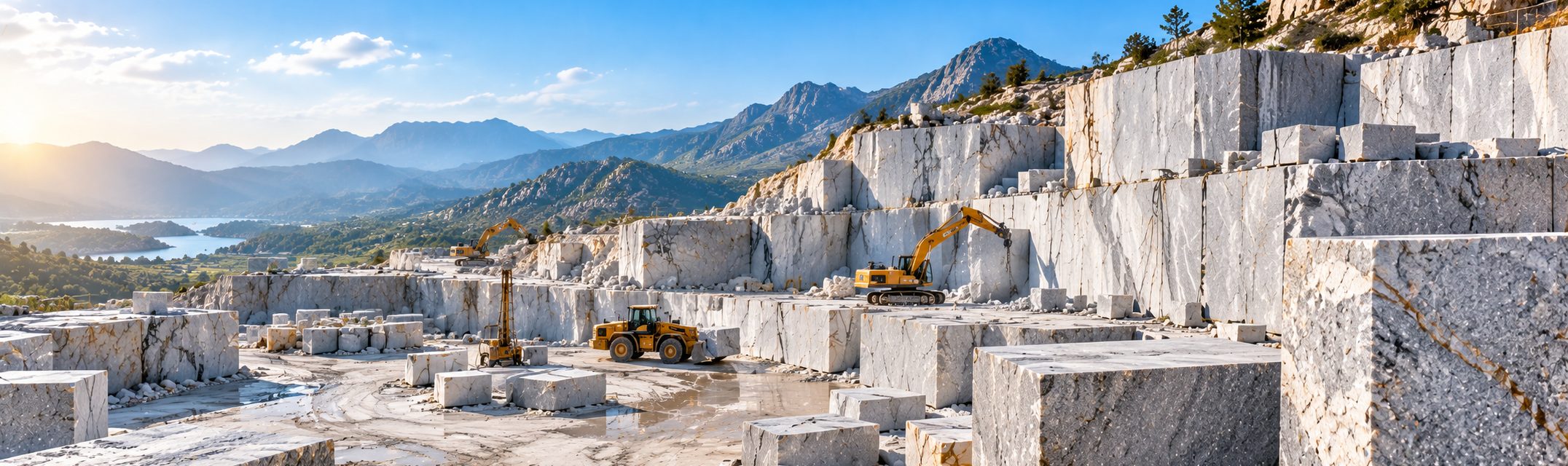
Navigating the Evolving Landscape of Indian Sandstone Procurement
 Team
TeamNavigating the Indian Sandstone Market in 2026
The Indian sandstone sector remains a cornerstone of the global natural stone trade, valued for its durability and aesthetic versatility. As of September 2026, the industry continues to adapt to a complex environment shaped by domestic regulatory enforcement and international trade policy. While demand for premium Indian sandstone persists across residential and commercial projects, the supply chain is undergoing significant structural changes. Businesses involved in the procurement and export of these materials must now balance traditional quality requirements with an increasingly rigorous compliance landscape.
In Rajasthan, a primary hub for sandstone production, state authorities have intensified enforcement of mining regulations. These measures, which include stricter mineral-tracking requirements and investigations into extraction practices, are designed to ensure legal compliance. For processors and exporters, this shift has led to higher operating costs and a greater emphasis on sourcing from fully documented, licensed quarries. While this does not signal a shortage of material, it has created a more selective market where traceability and reliable supply relationships are becoming essential competitive advantages.

Trade Policy and Export Support Updates
Exporters have received critical support through the extension of the Remission of Duties and Taxes on Exported Products (RoDTEP) scheme. Following advocacy by the Federation of Indian Granite & Stone Industry (FIGSI), the government extended the scheme through September 30, 2026. This extension maintains existing rates and value caps, providing a measure of cost stability for exporters navigating volatile global freight and energy markets. The industry continues to engage with policymakers to seek long-term frameworks that better offset embedded taxes.
On the international front, the trade environment with the United States has seen a notable recalibration. Following the high-tariff period of 2025, where duties reached 50%, the U.S. reduced the effective tariff on Indian natural stone to 18% in early 2026. While this reduction has improved price competitiveness and allowed for the reactivation of previously paused contracts, it does not represent a return to pre-2025 levels. Exporters are advised to view this as a stabilized baseline rather than a full reset, emphasizing the need for continued market diversification and pricing discipline.
New FEMA Regulations Effective October 1, 2026
A major shift in export compliance arrives on October 1, 2026, with the implementation of the Reserve Bank of India (RBI) FEMA Export-Import Regulations 2026. This consolidation replaces the 2015 framework and 167 associated circulars with a single, principle-based rulebook. For stone exporters, this update streamlines documentation by introducing a unified Export Declaration Form (EDF) that replaces previous separate filings. A key benefit of the new regulations is the extension of the standard export realization period to 15 months, or 18 months for trade invoiced in Indian Rupees. This change provides exporters with greater flexibility in managing cash flow and credit periods with overseas buyers. Businesses should review their open entries and update internal reporting workflows to align with these new requirements before the transition date.

Best Practices for Procurement and Compliance
For international buyers and domestic processors, success in the current market depends on rigorous attention to documentation and quality standards. Proper classification under the correct HS code is critical to avoiding customs delays and unexpected charges. Buyers should ensure that all shipments are accompanied by accurate test reports for water absorption, flexural strength, and abrasion resistance, as well as any required country-of-origin or phytosanitary certificates. As traceability becomes a standard requirement in many markets, including the UK and Europe, working with exporters who maintain transparent, documented supply chains is increasingly important. By prioritizing these compliance steps, stakeholders can mitigate risks and ensure smoother trade operations in an evolving global market.
Key takeaways
- The RoDTEP scheme for stone exporters has been extended through September 30, 2026, providing continued support for embedded taxes.
- U.S. tariffs on Indian natural stone have been reduced to 18%, offering relief but remaining above pre-2025 levels.
- Stricter quarry enforcement in Rajasthan is increasing compliance costs and affecting the availability of documented raw materials.
- New RBI FEMA regulations effective October 1, 2026, introduce a unified export declaration form and extend the export realization period to 15 months.
Sources
- Indian Sandstone Exporter & Indian Sandstone Slabs Supplier, muamat.com, Sep 7, 2026
- FIGSI’s persistence helps secure extension of RoDTEP support for stone exporters, figsi.in, Mar 10, 2026
- From 50% to 18%: U.S. Tariff Update on Indian Stone Exports, stonegalleria.in, Feb 3, 2026
- Rajasthan Quarry Enforcement and UK Sandstone Supply, pavingslabsuk.co.uk, Apr 8, 2026
- RBI FEMA Export-Import Regulations 2026: What Changes Oct 1, knmindia.com, Sep 4, 2026
- RoDTEP Scheme extended, big relief for the stone industry, figsi.in, Apr 1, 2026
- HS Codes, Quality Certificates, and Export Compliance for Indian Sandstone, tripurastones.in, Jun 3, 2026
- Natural Stone Export: RoDTEP, EPCG, Drawback, RIPS, bookmyca.in
This article was researched and drafted with AI from the sources listed above. Check the original sources before acting on any regulatory detail.
Topics