Stones buying guideLast updated October 2026

Marble

The classic luxury surface: crystalline, veined and timeless.

Price level
Premium
Best to buy
Mar–Jun, Sep–Nov
Top sources
Italy flagTurkey flagGreece flagSpain flagIndia flag

Overview

What is marble?

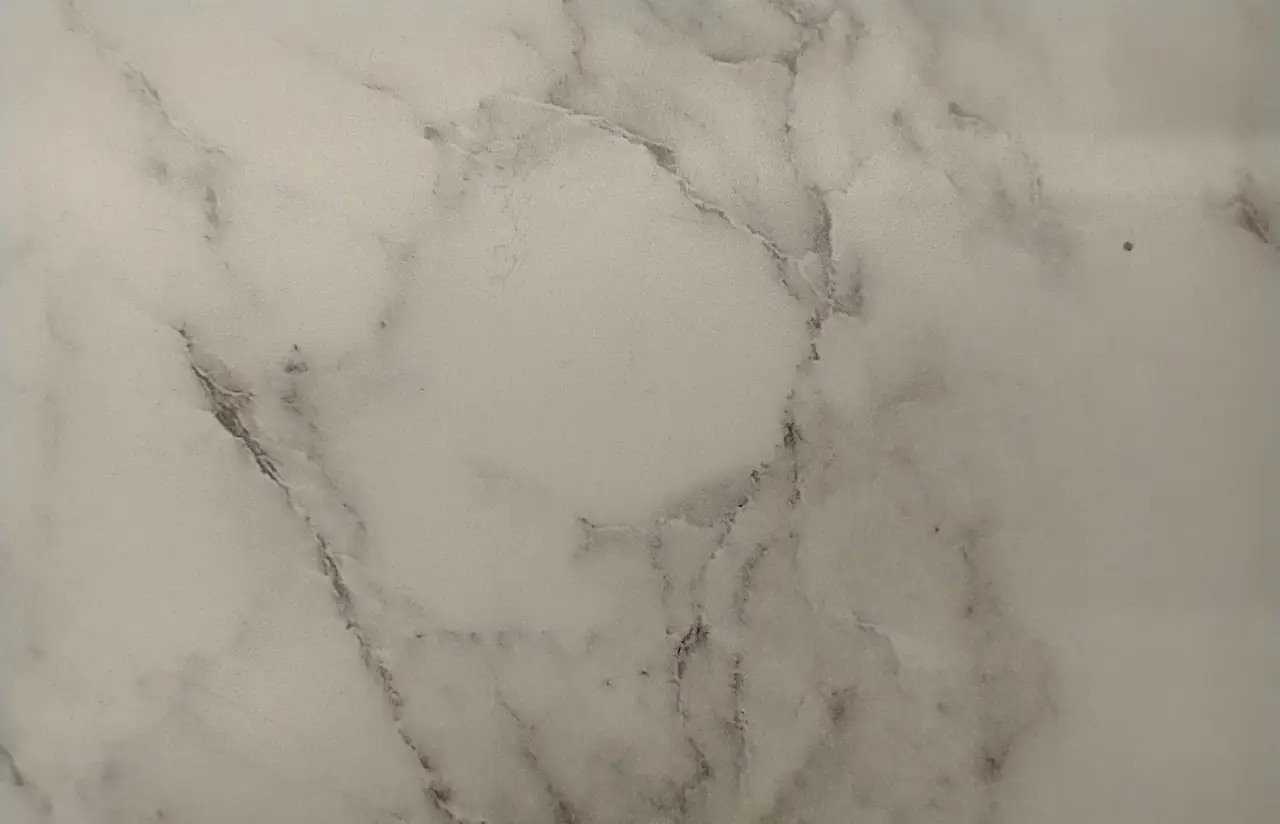
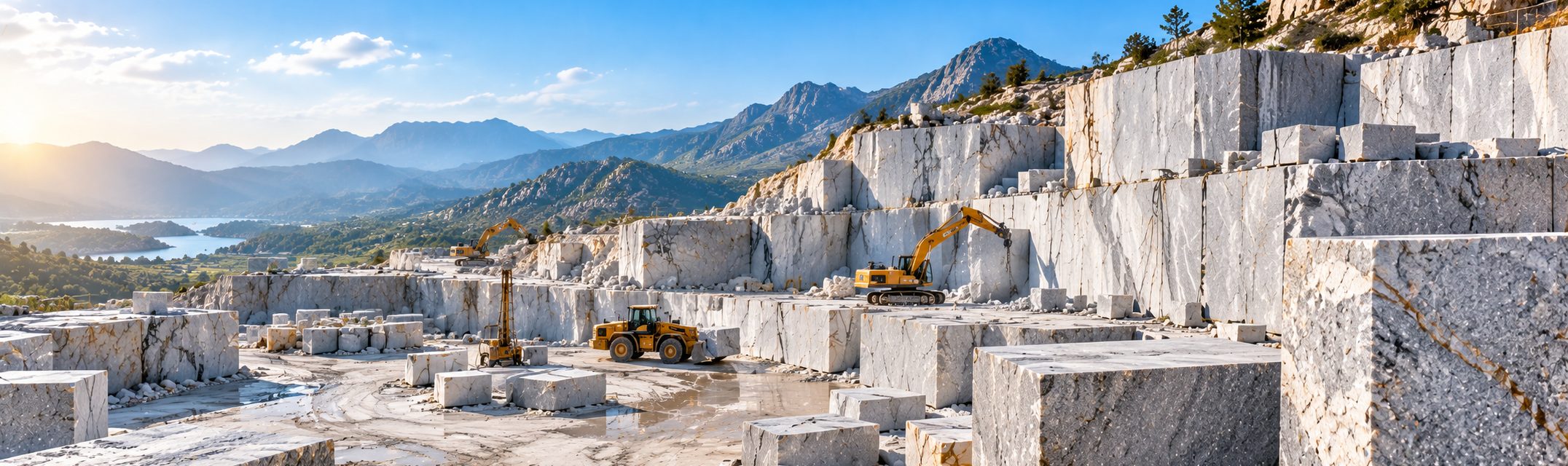
Marble is limestone or dolomite that heat and pressure deep in the earth have recrystallised. The calcite (or dolomite) crystals interlock into a dense, slightly translucent mass, and the impurities in the original sediment, such as clay, iron oxides, graphite and serpentine, flow into the veins and clouds that make every block unique.

In the trade the word is used more loosely than in geology: most polishable calcium-carbonate stones are sold as marble. The distinction that matters to a buyer is calcitic versus dolomitic. Dolomitic marbles, including many Greek, Brazilian and Indian whites, are harder and etch far less than calcitic ones, so always ask which you are buying.

Marble is graded block by block on colour consistency, vein pattern, fissures and how much resin it needs. The same quarry name can cover first-choice bookmatched slabs and commercial-grade tiles at a fraction of the price, so the name alone never tells you what you'll get.

Rock type
Metamorphic (calcite or dolomite)
Hardness
3 to 4 Mohs
Water absorption
≤ 0.20% (ASTM C503 limit)
Acid sensitivity
High: etches with lemon, vinegar, wine
Common thickness
10 to 20 mm tiles, 20 and 30 mm slabs
Finishes
Polished, honed, leathered, brushed, sandblasted
Applications

Best used for

  • Bathrooms and vanitiesLow traffic, low acid exposure, and the veining shines in a small space.
  • Feature walls and fireplacesBookmatched slabs turn a wall into the centrepiece of a room.
  • Interior floorsHoned or brushed for grip; polished only in dry, low-traffic areas.
  • Hotel lobbies and luxury retailSignals quality instantly and can be re-polished for decades.
  • Furniture, inlay and sculptureSoft enough to carve and profile, with a finish no synthetic matches.

Think twice for

  • Busy kitchen worktops. Acids etch calcitic marble within seconds. Choose a dolomitic marble or quartzite if you cook a lot.
  • Exteriors in freeze-thaw climates. Some marbles weather and bow on façades. Use dense, tested varieties with the right thickness.

Know the names

Popular varieties

  • Carrara

    Italy

    Soft grey veins on a white-grey ground. The everyday Italian white.

  • Statuario

    Italy

    Bright white with bold grey veins. Rare and premium.

  • Calacatta

    Italy

    Warm white with thick gold-grey veins. Among the costliest stones.

  • Thassos

    Greece

    Pure snow white, almost no veining. Dolomitic.

  • Crema Marfil

    Spain

    Even warm beige with fine veins. A hotel-floor classic.

  • Emperador Dark

    Spain, Turkey

    Chocolate brown with a web of fine light veins.

  • Nero Marquina

    Spain

    Deep black with crisp white veins.

  • Makrana

    India

    The historic white of the Taj Mahal.

Origins

Which countries to source from

The producing countries that matter for marble, what each is known for, and a direct link to vendors there.
  • Italy flag

    Italy Leading source

    The benchmark for white and statement marble

    • Carrara, Statuario, Calacatta, Arabescato (Apuan Alps)
    • Botticino (Lombardy)
    • Verona processing district
    Vendors in Italy
  • Turkey flag

    Turkey

    One of the largest producers, with a huge range at strong prices

    • Afyon and Muğla whites
    • Emperador (Denizli)
    • Burdur beiges
    Vendors in Turkey
  • Greece flag

    Greece

    Crisp, snow-white dolomitic marbles

    • Thassos
    • Volakas
    • Ariston, Kavala and Drama whites
    Vendors in Greece
  • Spain flag

    Spain

    Beiges and blacks from Alicante and the Basque Country

    • Crema Marfil
    • Emperador Dark and Light
    • Nero Marquina
    Vendors in Spain
  • India flag

    India

    Rajasthan quarries and a vast domestic trade

    • Makrana White (the Taj Mahal marble)
    • Udaipur Green
    • Kishangarh trading hub
    Vendors in India
  • Vietnam flag

    Vietnam

    An affordable source of crystalline whites

    • Yen Bai (Luc Yen) white
    Vendors in Vietnam
  • China flag

    China

    Processing hub that saws imported blocks into slabs

    • Shuitou and Xiamen factories
    • Guangxi White
    Vendors in China

Timing

Best time of year to buy

Buy in spring or early autumn, when quarries are fully working and fresh blocks are being cut. Avoid the August Italian shutdown and the Chinese New Year stall.

  1. Jan: slower or pricier
  2. Feb: slower or pricier
  3. Mar: best time to buy
  4. Apr: best time to buy
  5. May: best time to buy
  6. Jun: best time to buy
  7. Jul: normal
  8. Aug: slower or pricier
  9. Sep: best time to buy
  10. Oct: best time to buy
  11. Nov: best time to buy
  12. Dec: normal
Best time to buy Normal Slower or pricier
  • Turkish and Balkan highland quarries slow down or stop in snow (roughly December to February), so the choice of fresh blocks is best from April.
  • Italian quarries and many factories close for two to three weeks around Ferragosto in mid-August.
  • If your slabs are processed in China, factories shut for Chinese New Year (late January to February) and quote long lead times through December.
  • Marmomac in Verona (late September) is where new varieties and first-choice lots are shown.
  • Allow roughly two to three months from order to delivery for imported slabs.

Import costs

Tariffs and import duties

Base duties for the main import markets, the extra US surcharge by origin, and the trade remedies to check before you quote a landed price.

HS codes

  • 2515.11 / 2515.12Blocks, crude or sawn
  • 6802.21Simply cut or sawn slabs and tiles
  • 6802.91Polished and worked slabs, tiles, articles
  • 6802.10Mosaic pieces under 7 cm

Base import duty (MFN)

  • United StatesFree to 4.9%Blocks are free; sawn slabs and tiles are 1.9%; polished marble slabs are 2.5%; other worked marble is 4.9%. Indian marble also incurs a 10% Section 301 duty.
  • European Union0% to 1.7%Blocks duty-free; worked marble 1.7%.
  • United Kingdom0%Blocks and worked marble are both duty-free under the UK Global Tariff.
  • India40% blocks, 20% slabsPlus 18% IGST. Minimum import prices apply ($200/t blocks, $40/m² slabs under the 2016 policy): check the current DGFT notice.

Importing into the US? Add the 2026 origin surcharge

Section 301 rates in force since 24 July 2026, stacked on the MFN rate above.

  • Italy flagItaly10% min.Section 301 (2026) tops the duty up to at least 10% in total; no surcharge if MFN is already higher.
  • Turkey flagTurkey+12.5%Section 301 (2026) adds 12.5% on top of the MFN rate.
  • Greece flagGreece10% min.Section 301 (2026) tops the duty up to at least 10% in total; no surcharge if MFN is already higher.
  • Spain flagSpain10% min.Section 301 (2026) tops the duty up to at least 10% in total; no surcharge if MFN is already higher.
  • India flagIndia+10%Section 301 (2026) adds 10% on top of the MFN rate.
  • Vietnam flagVietnam+12.5%Section 301 (2026) adds 12.5% on top of the MFN rate.
  • China flagChina+12.5% & 30112.5% Section 301 (2026) plus the legacy China Section 301 duty (25% on most stone and machinery lines), on top of MFN.
  • Where slabs are sawn and polished can decide their customs origin: Turkish blocks processed in China may be treated as Chinese goods. Ask your broker on high-value orders.
  • China-origin worked stone carries the legacy US Section 301 duty on top of the 2026 surcharge.
  • Indian marble incurs a 10% Section 301 duty as of July 24, 2026.

Rates checked October 2026. Indicative rates for planning, not a customs ruling. Duties depend on the exact tariff line, origin, trade agreements and the rules in force on the day of entry. Confirm with a licensed customs broker before you price an order.

Before you order

Buying checklist

  1. 1Ask for photos or a video of the actual slabs, numbered. Never buy first-choice marble from a stock photo.
  2. 2Confirm calcitic or dolomitic. Dolomitic marbles etch far less and suit kitchens better.
  3. 3Look at the back of the slab: mesh and resin are normal on fragile varieties, but heavy filling can hide fissures.
  4. 4Bookmatched walls need sequential slabs from the same block. Reserve the whole bundle.
  5. 5Put thickness tolerance (for example ±1 mm on calibrated tiles) and finish in the purchase order.
  6. 6Order 10 to 15% extra for cutting, breakage and future repairs from the same lot.
  7. 7Seal with an impregnator after installation and clean only with pH-neutral products.

Price level: From budget Turkish and Vietnamese whites to Calacatta, one of the most expensive stones on earth.

Vendor Network

Ready to source marble?

Compare verified suppliers, or post an RFQ and let them come to you with quotes.

Keep reading

More in Stones

India flagBrazil flagChina flagNorway flag

Granite

Crystalline igneous stone that shrugs off scratches, heat and acids. The world's go-to for countertops, stairs, paving and cladding.

  • Kitchen countertops
  • High-traffic floors and stairs
  • Exterior cladding and paving

Best to buy: Mar–May, Sep–Nov

Brazil flagIndia flagNorway flag

Quartzite

Metamorphosed sandstone fused into near-solid quartz. Premium kitchens love it for marble-like veining that doesn't etch.

  • Kitchen countertops
  • Islands and waterfall edges
  • Backlit features

Best to buy: May–Oct

Turkey flagItaly flagIran flagMexico flag

Travertine

Banded limestone formed at mineral springs, with signature holes. A favourite for patios, pool decks and warm, relaxed interiors.

  • Patios and garden paving
  • Pool decks and coping
  • Façades and cladding

Best to buy: Mar–May, Sep–Oct

All 13 guides